
In FY24, the net income generated from Waqf properties fell to about Rs 1.26 crore from Rs 150 crore in FY20.

The Supreme Court is scheduled to pronounce interim orders on key issues related to the Waqf (Amendment) Act, 2025, including the power to denotify properties declared as waqf.

The district court in Shimla on Thursday upheld the municipal commissioner court's decision to demolish the entire structure of Sanjauli mosque, rejecting a plea by the Himachal Pradesh Waqf Board and the Sanjauli Mosque Committee.

'It is not as if Hindus are not being touched at all, and only Muslims are.'

The Supreme Court expressed its disapproval of an analogy used by the Centre in support of the inclusion of non-Muslims in Waqf boards, stating that such logic would disqualify a bench of Hindu judges from hearing matters related to Waqf. The CJI questioned the Centre's stance on the provisions of the Waqf (Amendment) Act, 2025, which allows non-Muslim members in the Central Waqf Council and state waqf boards. The Solicitor General defended the provisions, emphasizing that the non-Muslim inclusion is limited and does not impact the Muslim composition of these bodies. However, the CJI asserted that judges shed their religious affiliations while serving on the bench and maintained their secularity in their judicial capacity.

Underscoring the 'presumption of constitutionality in favour of law', the Supreme Court on Tuesday said petitioners challenging the waqf law needed a 'strong and glaring' case for interim relief.

'There's no transparency in work (of the Wakf Board), in property transactions (of the Waqf).'

The Nirmohi Akhara has approached the Supreme Court, seeking a directive to the Centre to reconstitute the Shri Ram Janmabhoomi Theerth Kshetra Trust as a 'public trust' and include structural safeguards for oversight by seers, citing alleged large-scale embezzlement of donations.

The Supreme Court has upheld the deletion of the 'waqf by user' provision in the amended waqf law, stating it is not arbitrary and addresses potential misuse.

The specter of how the Munambam issue was exploited during the November by-elections is proof of the price Kerala is paying for its emergent politics. Controversies become the stuff of slow-burn and brinkmanship. The former promises mileage; the latter searches for an advantage, notes Shyam G Menon.

Five individuals have been arrested in Ahmedabad, India, for allegedly impersonating trustees and collecting rent for 17 years from properties belonging to two Waqf Board-registered trusts. The accused, who are not actual trustees, constructed around 100 houses and shops on the trust land and collected rent from them, misusing the properties for personal benefits. An FIR has been registered against them for cheating and forging documents.

The Centre on Wednesday told the Supreme Court that nobody can claim right over government land and it is legally empowered to reclaim properties which are declared waqf by using the waqf by user principle.
The matter would be heard by Chief Justice B R Gavai and Justice Augustine George Masih.

Congress MP Mohammad Jawed and AIMIM president Asaduddin Owaisi have challenged the validity of the Waqf (Amendment) Bill, 2025 in the Supreme Court, arguing that it violates constitutional provisions. The petitions claim the bill imposes arbitrary restrictions on Waqf properties and their management, undermining the religious autonomy of the Muslim community. They also allege that the bill discriminates against Muslims by imposing restrictions not present in the governance of other religious endowments. The bill was passed in the Rajya Sabha and Lok Sabha, with the petitioners arguing that it introduces limitations on the creation of Waqfs based on the duration of one's religious practice, mandates inclusion of non-Muslim members in Waqf administrative bodies, and shifts key administrative functions to government officials, thereby diluting the autonomy of Waqf management.

The Supreme Court of India began hearing a batch of petitions challenging the constitutional validity of the Waqf (Amendment) Act, 2025. The bench, led by Chief Justice Sanjiv Khanna, asked both sides to address whether the court should entertain the petitions or relegate them to the high court. The hearing is underway with senior advocate Kapil Sibal arguing for the petitioners. The act, which was passed by Parliament following heated debates, has been challenged by various parties including AIMIM leader Asaduddin Owaisi, All India Muslim Personal Law Board (AIMPLB), and Jamiat Ulama-i-Hind.

Samajwadi Party chief Akhilesh Yadav said his party would oppose the Centre's move to bring a bill in Parliament to amend the 1995 law governing Waqf boards, and accused the BJP of trying to snatch the rights of Muslims.

'So, they have taken away the word Waqf from the Bill.' 'It will now be known as the UMEED Act.'

The Allahabad High Court has ruled that the Places of Worship (Special Provisions) Act, 1991, prohibits only the conversion of religious character but does not prevent the state from acquiring such properties for secular and public purposes. This observation came while dismissing a petition challenging the widening and beautification of the Dalmandi area in Varanasi for the Shri Kashi Vishwanath Dham corridor, which involved the proposed demolition of six ancient mosques.

The bill to amend the law governing Waqf boards proposes far-reaching changes in the Wakf Act, 1995, including ensuring the representation of Muslim women and non-Muslims in such bodies.

'We are not all Abduls, you know. Our community has any number of retired civil and defence officers, doctors, engineers, lawyers.'

Hours after the Waqf (Amendment) Bill was passed in Parliament, 50 individuals embroiled in land disputes in Kerala's Munambam joined the BJP, hoping for a resolution to their claims. The residents, who have been protesting for 174 days, allege that the Waqf Board is claiming ownership of their properties. BJP leader Rajeev Chandrasekhar assured them of the party's support and a meeting with Prime Minister Narendra Modi to express gratitude. The BJP capitalized on the Catholic Church's support for the legislation, accusing the Congress and the Left of appeasement politics. The opposition, however, questioned the impact of the bill on the Munambam issue.

The Indian government defended the Waqf (Amendment) Act, 2025 in the Supreme Court, arguing that waqf, while an Islamic concept, is not an essential part of Islam. Solicitor General Tushar Mehta stated that waqf is essentially charity, which is recognized across religions, and cannot be considered a fundamental tenet of any faith. He also argued that the amended law addresses secular aspects of waqf and activities unrelated to Islam, and that "waqf by user" does not grant ownership of public land. Mehta highlighted the extensive consultations involved in the bill's creation, including feedback from various stakeholders. The hearing will continue on Thursday.

A bench comprising Chief Justice B R Gavai and Justice Augustine George Masih asked senior advocate Kapil Sibal, appearing for those challenging the validity of the law, and Solicitor General Tushar Mehta, representing the Centre, to file their written notes by Monday.

Seeking to allay fears that existing Waqf properties will be subject to scrutiny after the amended Waqf law comes into force, a parliamentary panel on Tuesday recommended that no cases will be reopened against such properties on a retrospective basis, provided the asset is not in dispute or belongs to the government.

The Indian government has claimed a significant increase in waqf land following the 2013 amendment to the Waqf Act, asserting that the addition of 20 lakh acres raises concerns about potential "misuse" of the provisions. In an affidavit to the Supreme Court, the Centre highlighted a 116% rise in auqaf area after the amendment and urged the dismissal of petitions challenging the Act's validity.

The monsoon session of Parliament will set the tone for how the Hindu community feels about what happened at the Ram Mandir. Whether emotions will be stirred within the voters of India lies solely at the oratory skills of the Congressis and Samajwadis, notes Zainab Sikander.

Over one lakh Muslims gathered in Karnataka to protest the Waqf Amendment Act, 2025, which they say erodes the autonomy of Waqf institutions and threatens their rights. The protest, organized by the Karnataka State Ulema Coordination Committee, saw strong opposition to provisions in the amended law that they argue allow for coercive acquisition of Waqf properties. Leaders alleged that the amendment is part of a broader political agenda and urged the community to uphold their legal and constitutional rights.
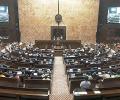
The Waqf (Amendment) Bill, 2025 was passed in the Lok Sabha early Thursday, with 288 members supporting it and 232 against it.
As soon as one of the pleas came up for hearing on Friday, Solicitor General Tushar Mehta, appearing for the Centre, objected and said there can't be an "endless" filing of pleas challenging the Act.

The Karnataka government has warned that disciplinary action will be taken against those officials who change the land mutation records and serve eviction notices to farmers under the Waqf Act.

The Supreme Court on Monday agreed to consider listing for urgent hearing the petitions challenging the constitutional validity of the Waqf (Amendment) Act, 2025.

It provides for a broad-based composition of the Central Waqf Council and the State Waqf Boards and ensures the representation of Muslim women and non-Muslims in such bodies.
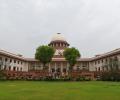
The Indian government has defended the Waqf (Amendment) Act, 2025 in the Supreme Court, arguing that there cannot be a blanket stay on the law as there is a presumption of its constitutionality. The Centre countered the pleas challenging the law's validity, asserting that the amendments were undertaken after a comprehensive study by a parliamentary panel. The government also highlighted the "reported misuse" of earlier provisions and the increase in waqf land, claiming that over 20 lakh hectares were added after 2013.

The bill aims to include all the Muslims sects in the Waqf board, Rijiju said.

The Supreme Court of India has sought responses from the Centre and others on a petition challenging the constitutional validity of certain provisions of the Waqf Act, 1995. The petition argues that the Act gives undue favor to waqf properties and deprives non-Muslims of their property rights. The court has tagged the petition with pending petitions that raise similar issues.

Opposition MPs in the parliamentary committee scrutinising the Waqf (Amendment) Bill are scheduled to meet Lok Sabha Speaker Om Birla on Tuesday to protest its chairperson Jagdambika Pal's alleged 'unilateral' decisions and attempts to 'bulldoze' proceedings, indicating that they may disassociate themselves from the panel.

A fresh plea has been filed in the Supreme Court challenging the constitutional validity of the Waqf (Amendment) Act, 2025, claiming it was a "blatant intrusion" into the rights of a religious denomination to manage its own affairs in the matter of religion. The plea, filed by Samastha Kerala Jamiathul Ulema, argues that the amendments would distort the religious character of Waqfs and irreversibly damage the democratic process in their administration. Several other petitions have been filed in the apex court challenging the validity of the bill, including those by Congress MP Mohammad Jawed, AIMIM president Asaduddin Owaisi, and AAP MLA Amanatullah Khan.

The house of the BJP Minority Morcha's Manipur president, Asker Ali, was set on fire by a mob allegedly for supporting the Waqf Amendment Act. The incident happened at Lilong in Thoubal district on Sunday night. Ali had expressed his support for the Act on social media on Saturday. An irate mob gathered outside his residence around 9 pm, vandalised it and later set it on fire. Following the incident, Ali posted a video on social media, apologising for his earlier statement. He also expressed opposition to the Act.
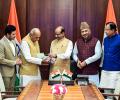
'When voting clause by clause on Waqf came up in the JPC, the TDP and JD-U supported the BJP on each and every clause.'

Tamil Nadu Chief Minister and DMK president M K Stalin announced that his party will file a case in the Supreme Court against the Waqf Bill passed in the Lok Sabha. The opposition AIADMK expressed solidarity with the DMK's stance, while the BJP members staged a walkout from the Assembly in protest. The CM argued that the amendment was passed at the behest of a few allies despite opposition from majority parties and that it is an attack on the Constitution and religious harmony. The DMK claims the bill threatens the autonomy of the Waqf Board and the Muslim minority population.
